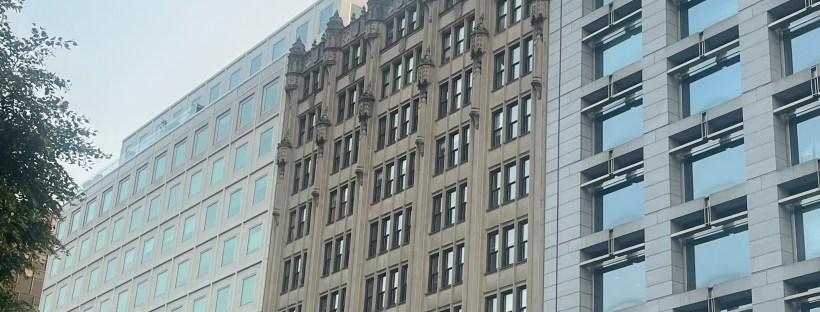
The Barr Building located at Farragut Square in downtown DC is a historic building that was used back in 1942 by the president at the time, Franklin D. Roosevelt, to oversee the relocations/internments of more than 100,000 Japanese Americans. The Barr Building was the headquarters of the War Relocation Authority and they were the people who managed the daily lives of the Japanese Americans in the incarceration camps and they managed everything like the food, housing, education, work, etc.
The Barr Building right across from Farragut Square is very inconspicuous if you are not paying much attention to the buildings around you. Even I didn’t notice when I was sitting right next to it. When I heard about the Barr Building, and when I found out what it was used for, I was shocked and I began to wonder about what else happened in there and how it was repurposed. In the future, if you are ever in Farragut Square, check out the building, think about it, and maybe share some of its history too.
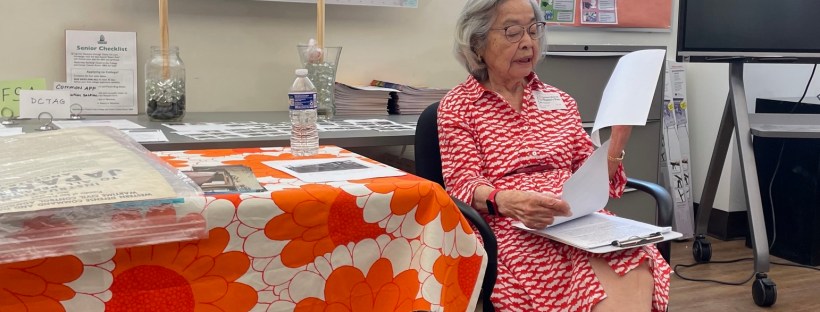
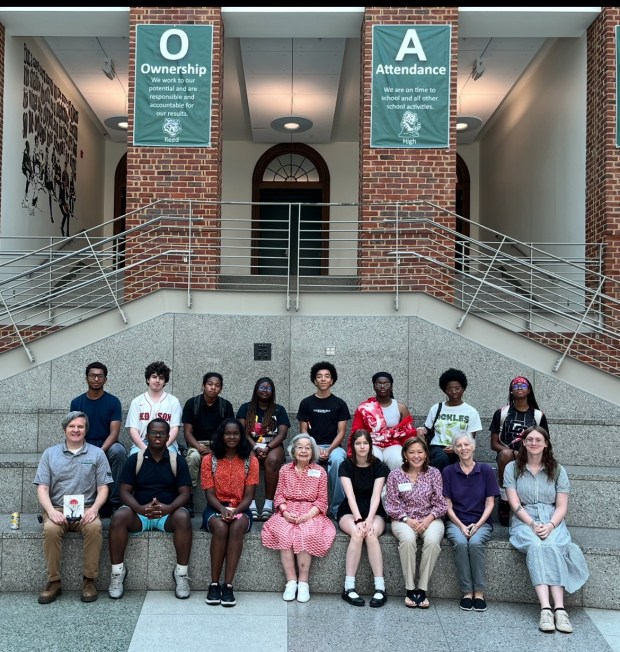
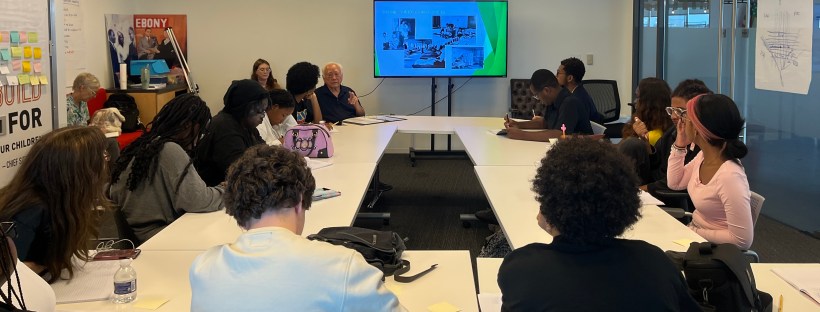
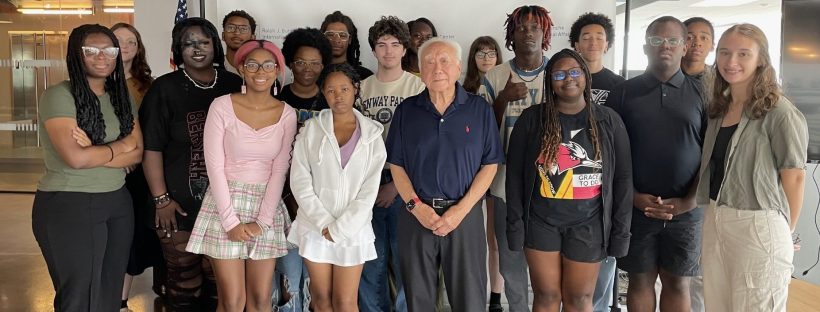
Note from the Program Director: On Friday morning, July 24, Japan in DC had the honor to meet with Mary Murakami to hear the story of her experience as a teenager living through one of the darkest chapters of American history – the incarceration of Japanese Americans during World War II. Mary was accompanied by her daughter, Kimi Murakami, who provided additional information and context.
Mary was 14 years old when the Japanese bombed Pearl Harbor in 1941, leading to the entry of the US into the war, followed by President Franklin D. Roosevelt’s signing of Executive Order 9066 in February 1942, which led to the incarceration of approximately 120,000 men, women, and children of Japanese descent – most American citizens. Mary described to our students in great detail what happened to her and her family before, during, and after her incarceration at Topaz Camp. Despite unbelievable hardships and disruptions to her high school education, through persistence Mary went on to attend the University of California at Berkeley, to earn her degree in public health/microbiology, and have a successful career as a microbiologist. We are so grateful that Mary has become a regular visitor to Globalize DC’s Japan programs. Mary is now 99 years old. She is a masterful storyteller. Her unrelenting commitment to sharing her experience and wisdom with younger generations is awe-inspiring, and our students felt the impact of this experience. Here are some of their reactions. Special thanks to Jackson-Reed High School and Assistant Principal Marc Minsker for hosting this program, and inviting students from the school’s Academy of Global Studies and Diplomacy to join us as well.
Lauren: The part of Mary’s story that made the biggest impact on me was at the start when she told us she was around our age going through this. Especially when she said she eventually could not attend school. I can’t imagine not being able to go to school, having to move into a camp in the middle of nowhere with my family and having to sell everything I couldn’t take with me. That part of her story impacted me most. A few feelings I have about Mary and the overall experience is proud, empathetic, and disappointed. I felt proud hearing Mary’s story, because even though she is 99, she is still able to go out and tell her story so that the next generation can carry it on. I felt empathetic because even though African Americans weren’t put into camps like Japanese Americans, they were still treated as badly, so hearing her side of the internment camps made me feel very empathetic. Lastly, I felt very disappointed with the US government because the US might not have been that diverse then, but people still should have been taught to treat others with respect no matter their gender or race. A life lesson I would probably take away is what she said at the end, “Remember your civil rights.” That is so important especially with what’s going on right now with ICE and deportation.
Christian: The lessons I learned are that civil rights and the American dream should be something that nobody should be able to stop – not the government or any person. And lives may seem hard but will get better through will and hope.
Jaylen: The part of Mary’s story that made the biggest impact on me was the part where she was answering a question about question 27 and 28 of the loyalty questionnaire. This really impacted me because she talked about families being separated and that is such an important thing to me because putting myself in their shoes, being around my age, being as clueless as I am, it would be really scary and I am not sure if I would have been able to do it. Beyond the story, I felt that this experience, similar to Gerald Yamada, was a great thing because it shows (no offence) that the history from back then is fleeting and we might not have much more time with these people so we should cherish our time with them. I think cherishing our time and listening to our elders is actually good for us and so that we can carry on the legacy of the past generations.
Malia: The part of Mary’s story that had the biggest impact on me is when she talked about how her dad didn’t believe that Japan and the US were at war. It shows that the most unexpected things can have big impacts. I feel like it’s good that she is able to share her experience so that people can make an effort so it won’t happen again. A life lesson I will take away is to always try to protect my civil rights. Because you never know when they can be taken from you.
Pippa: The part of Mary’s story that made the biggest impact on me was when she talked about how it was really difficult for her to receive an education, because even though it seems like she was really bright, she experienced a huge obstacle that stopped her from fulfilling her potential and living a normal life, and I think that goes for everyone in the camps, not just school kids. On the other hand, I thought the fact that she was still able to get into college was very uplifting. I thought it was interesting how she said, “at this point, this experience is a very small fraction of my life, but it still stays with me.” It shows that even though some historical events like this only lasted a short amount of time, the actual impact they have on people’s lives is immeasurable. I also thought Mary’s perseverance throughout it all was admirable. The life lesson I take away is, like she said, it’s important to protect civil rights. Her experience shows what can happen when they are ignored and so it’s really important to be active in defending and fighting for civil rights even now.
Blessing: The part of Mary’s story that made a big impact on me is how her education was very difficult for her and she missed her 9th grade, but did not give up on her education and still tried to find a way to go to the university after World War II. I feel like she is a strong woman because of the way and circumstance that she was living as a teen was very bad. I observed that she is a person that gets the thing that they want and has a strong family that did some of the things to help them survive during the time they were in the camps.
Madisen: Mary’s story of returning back to society after being incarcerated made the biggest impact on me because of how difficult it was to continue her life. Mary had only just received her diploma and chose to return to California, only to face racial discrimination. Because the government chose to negatively represent Asians, many Americans did not like Asians or Asian-Americans or want them in their community. This impacted me because of how unfair it must’ve been for Asian Americans continuing their life in America. I observed that Mary hadn’t been particularly depressed during this time in her life. Although she explained that her time at the camp was rough and often violent, she didn’t let that deter her. Mary had also described how fortunate her family was to receive rooms and overall be with each other, unlike many families who were separated. A life lesson I may take from Mary’s presentation is to preserve your education. When Mary and her family were incarcerated, she had to stop school for a time, and even before the camps she couldn’t go to school because of the curfew put on Japanese people. However, the incarceration camps did not stop her from trying to get her education.
Aston: I was deeply inspired when she had told us about the daily life of the kids in the camps because it showed me that you and the people around you can enjoy yourselves within dark times. From the overall experience I felt determined to take this knowledge and use it to try to prevent this from ever happening again. The life lesson I’ll take away – that even when you find yourself in a dark time, you can still come back stronger.
Liam: The part of Mary’s story that had the biggest impact on me was when she talked about her life before the camps, especially when she talked about how the FBI would go through Japantown and the Army blocking off streets. I’m not really sure why but that stuck with me. The life lesson I took away from Mary’s story is when she said “strive to do right without violence” at the end.
Morgan: The part where Mary said she originally wanted to answer “No. No” to question 27.28, but her family made a group decision to answer “Yes. Yes.” Those two questions sparked many fights and deaths inside the camps, and separated families because people who answered “No. No,” “Yes. No,” or “No. Yes” were considered disloyal and were relocated. I might take away the fact that sometimes you have to make do with what you have, because life will not always be kind to you. Also, to live is to keep going, even in the face of adversity. $25 and a train ticket . . . and she became a biochemist!!
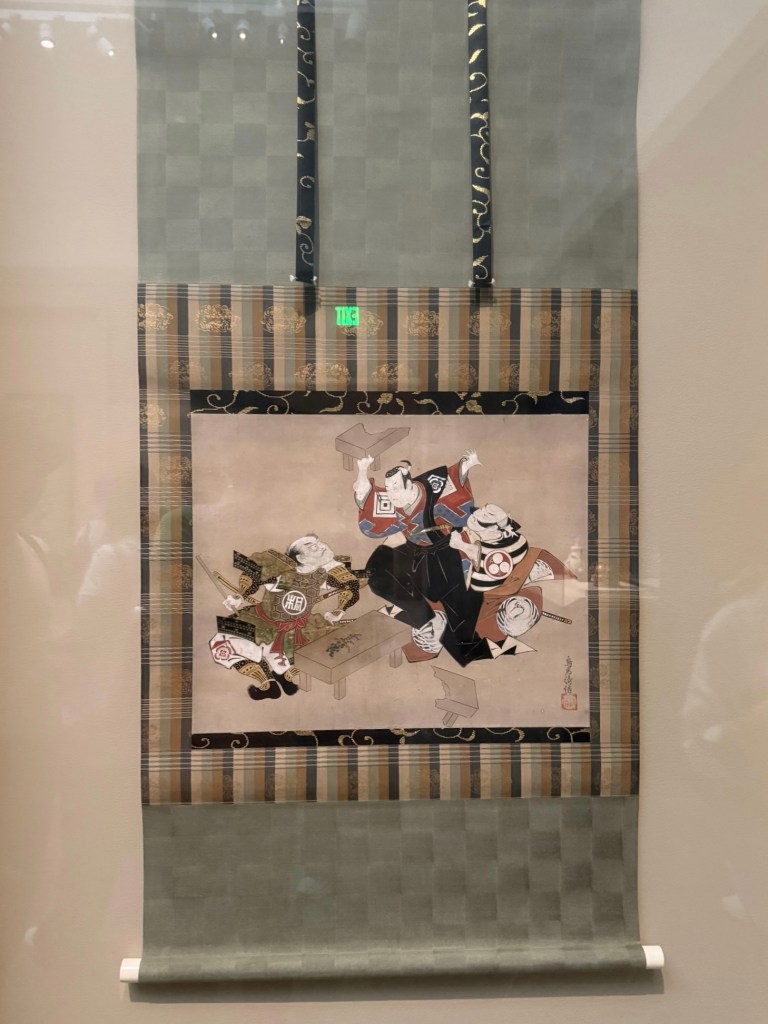
This Japanese print is from the National Museum of Asian Art. It represents the true story of two brothers, Soga Sukenari and Soga Tokimune, who spent eighteen years planning to avenge their father’s murder that happened in 1176. In the end, they successfully killed their father’s murderer in 1193. During the attack, the older brother, Sukenari, died in battle, while the younger brother, Tokimune, was captured alive. Their story became a very popular subject in Kabuki theater, and many artists created prints showing actors performing scenes from it. Through the Japan in DC program, I learned that many Japanese artworks are based on historical events, legends, and often depict famous theater performances. This also helped me to understand why stories like this are so important in Japanese culture and how artists used their prints to keep these stories alive. I found this story especially interesting because the characters were memorable. I also really enjoyed learning about their journey and listening to the story from our tour guide, Ru Fan.
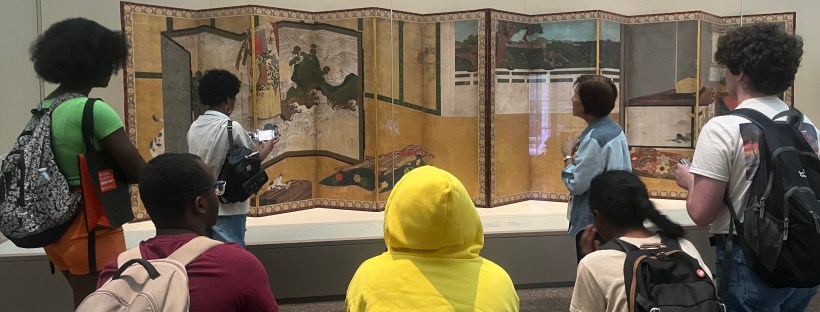
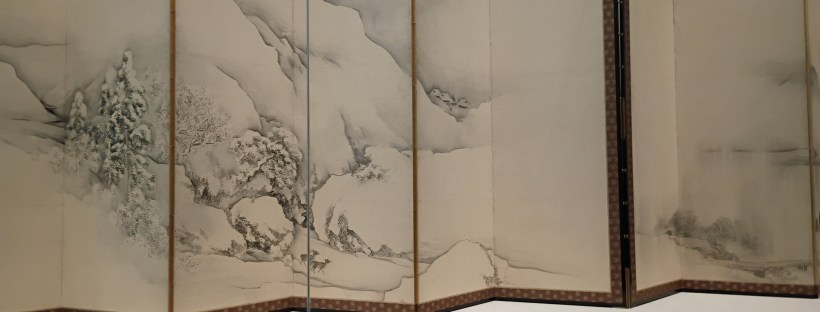
On Friday, July 17, we visited the National Museum of Asian Art. We were given a tour of the Japanese art collection. During the tour, I ended up being really surprised by the amount of influence that other cultures had on Japan, and how those influences could be seen just by looking at their art.
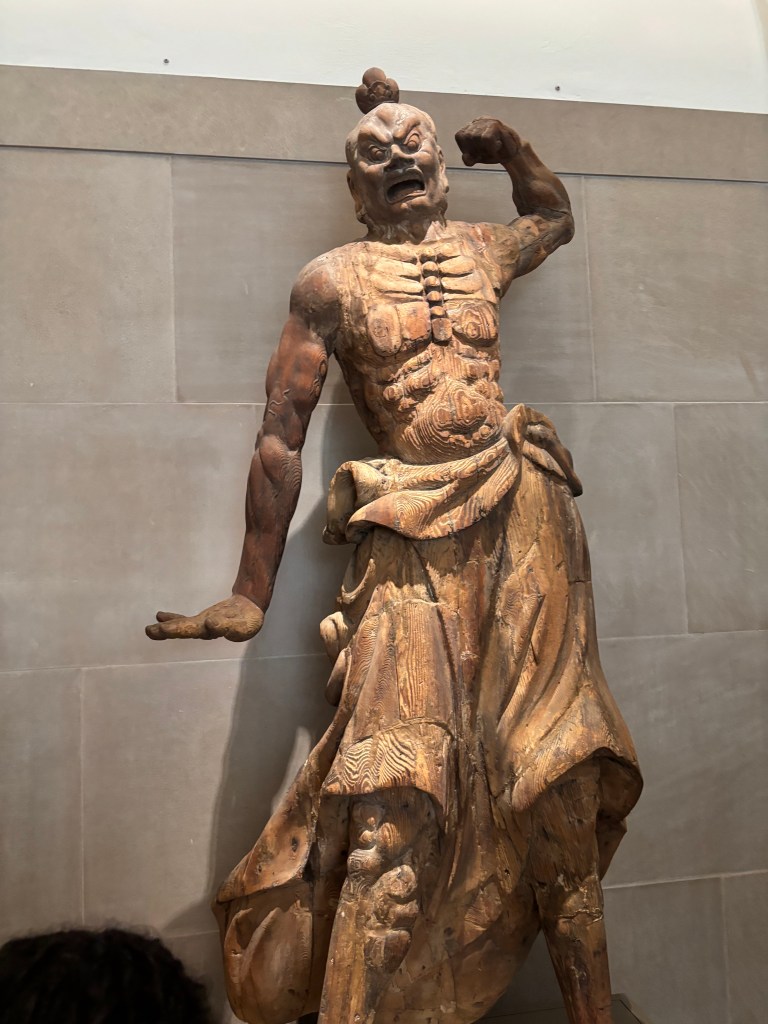
To begin the tour, we saw a wooden guardian figure from the Kamakura period. We learned that these types of statues were placed at the front of shrines to ward out things that weren’t compatible with Buddhism and let in those that were. Our tour guide, John Brennan, explained that Buddhism and Shinto were the most prominent religions of Japan for much of its history. But the religions were not practiced separately. Instead, many shrines served both as Buddhist and Shinto shrines, and it became valued in Japan to follow and coexist with both Buddhism and Shinto. This was really interesting to me, because I’ve never heard of two religions being practiced together – it seems to go against the idea of devoting yourself to a religion in the first place, especially thinking about it in the context of the Abrahamic religions that most of us are used to. But thinking about what I’ve learned about Buddhism and Shinto in the past, it actually makes sense. Neither Buddhism nor Shinto has a “God.” In fact, neither religion includes the idea of any sort of all-powerful, universal creator. Therefore, you can worship both without having to “choose” a God. Additionally, I’ve learned before that Shinto doesn’t even have a central text, making it easier to combine it with Buddhism. In the end, we were told that during the Meiji restoration, most “foreign” things and ideas in Japan became taboo, and Buddhism, having originated from India, was pushed out. But to this day, we can still see Buddhist influences in Japan reflected in these art pieces.
Chinese Influences
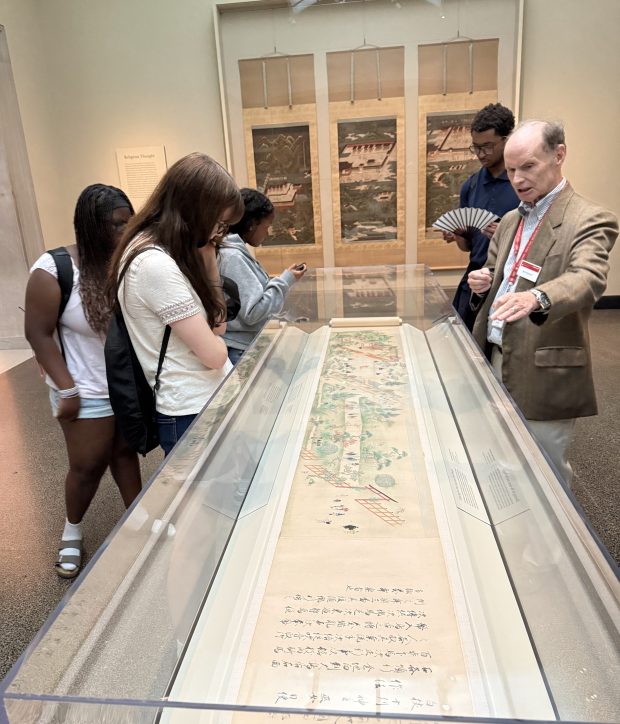
While looking at the art and being told its history, one thing became clear — Chinese art was one of, if not the most prominent outside influence on Japanese art. Mr. Brennan was the perfect person to tell us about this. He had studied both Chinese and Japanese for a long time, had lived in Japan and China, and knew their history well. Through the art piece below, we learned that a long time ago in Japan, there was a certain writing style that used only Chinese characters and was comprehensible to both Japanese and Chinese speakers. I thought this was really interesting, because when it comes to spoken Japanese and Chinese, they are completely different. Yet, since Chinese characters are used to convey meaning in both written languages, using written language can actually produce something that can be understood on both sides. As far as I know, there’s no other pair of languages that have this attribute. The text in this specific art piece wouldn’t be very easy to understand for Japanese speakers today, but it’s still fascinating to know that there was a time when the written language worked this way.
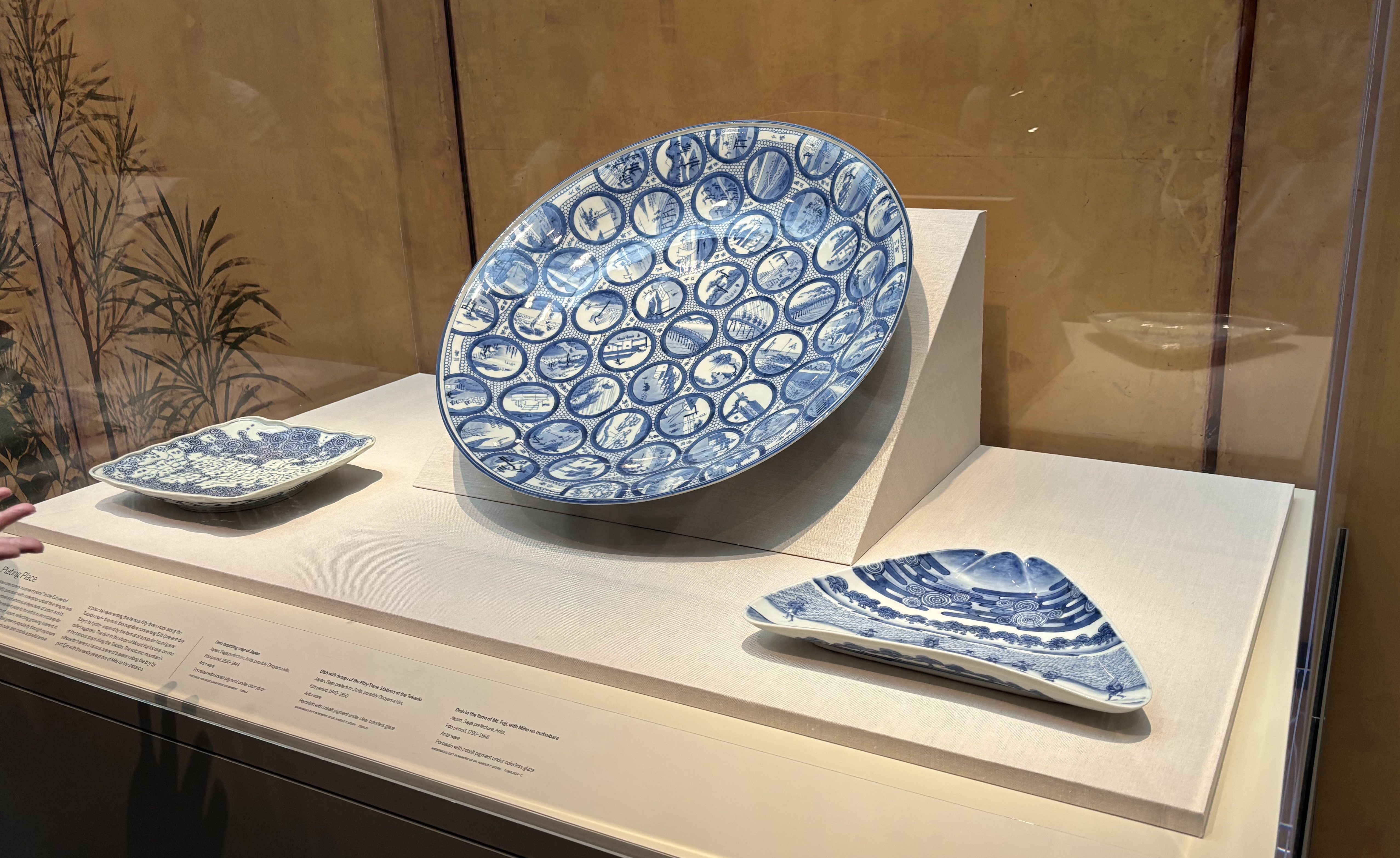
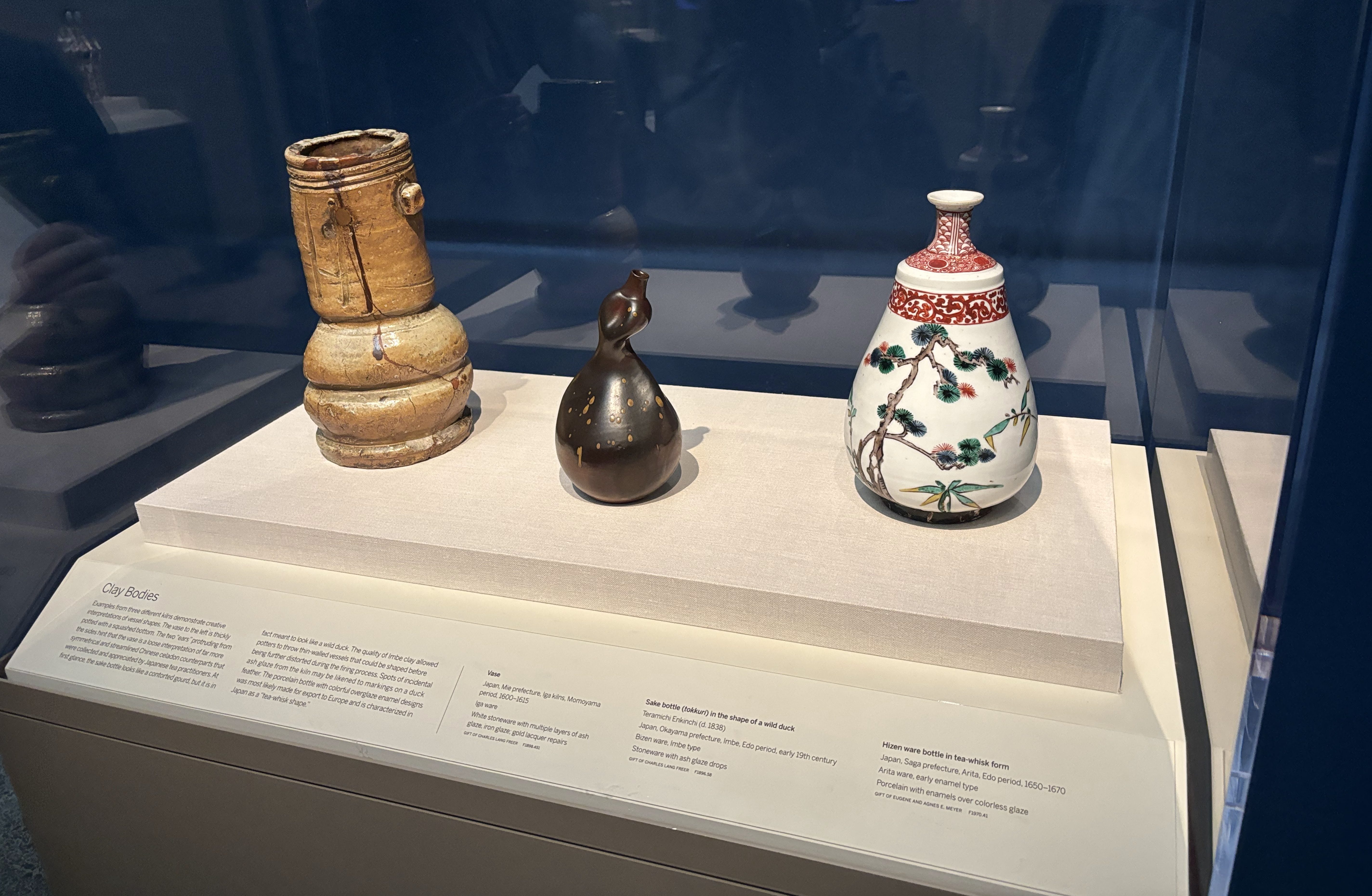
Below are more Japanese art pieces that were influenced by Chinese art. As our tour guide stated, although the inspiration is clear and the pieces show a lot of similarity to traditional Chinese art, none of them are exactly the same as their inspiration. For example, while the porcelain plate appears very similar to the well-known Chinese blue and white ceramics, its design is actually based on a board game played long ago in Japan. In the other picture with 3 pieces of pottery, the piece on the very left uses a pottery shape popularized in China. But rather than being a flawless, smooth and evenly glazed work, as these types of pieces usually were, it is purposely made to look imperfect, conveying the Japanese concept of wabi-sabi (meaning to see beauty in imperfection). It goes to show that while many cultures, and evidently Japanese culture, have taken in many outside inspirations and influences, they often change to reflect the culture itself, despite being something originally foreign.
In Modern Times
Seeing these cultural exchanges through Japanese art made me think about how these same cultural influences happen even in the modern day. Take Jazz, for example. It’s one of the most important genres in American music, and it is fully American-born. However, I’ve always found it interesting that Jazz is also extremely popular and has a large presence in Japan. Apparently, this phenomenon starts from the early 1900s, at the very beginnings of Jazz. During World War 2, Jazz was banned by the government, being considered “enemy music” because of its American origins. But despite this, it continued to flourish, especially after the war and beyond. And just like what I talked about when it came to the porcelain and pottery, this movement of Jazz to Japan didn’t just mean that they took an American genre and popularized it there – instead, they’ve developed and molded it into “Japanese Jazz,” having a distinct sound from what the music originally came from. There are lots of other examples of this sort of movement of culture, from America to Japan, Japan to America, and all countries, all throughout history, as shown in the art we saw.
I’m really glad we got to have a tour of the exhibition and I learned a lot!
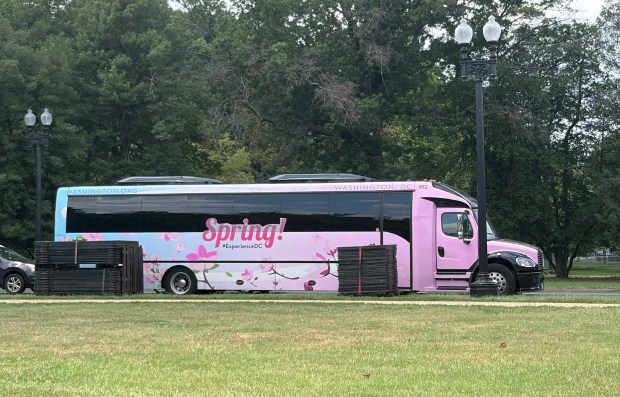
Cherry blossom trees are an important gift for many people from all across the states and the world to enjoy the beauty of, but cherry blossoms are more than just a beauty. They are a great symbol of friendship between the United States and Japan. In my opinion, cherry blossoms are a great show of growth from the tensions of the U.S. and Japan into their blooming friendship. Even after a brutal war. Before that, we need to know the story behind the trees. Who and what helped to bring these here?
Cherry blossoms were first introduced by Eliza Scidmore. Eliza was a writer and photographer who was also the first woman on the Board of Directors for the National Geographic Society. She had been to Japan before and had developed a big interest in the cherry blossom trees. Amazed by these trees, Eliza proposed the idea to the President and every Superintendent of the Office of Public Buildings and Grounds over two decades to get the trees into D.C. After the many denied proposals, she turned her efforts into gaining traction with the trees. Eliza went on to host a cherry blossom viewing party in 1905. By doing this, it happened to catch the eye of botanist David Fairchild.
Though Eliza was the first to actively make an impact to get cherry blossoms to the U.S., David Fairchild played a very key role in the story of the cherry blossoms. Fairchild was a pioneering American botanist and plant explorer who also grew a liking to these trees. The following year after Scidmore’s party, in 1906, Fairchild did a test of planting cherry blossoms to see their ability to survive in other soil, leading to a success. He would later go on to promote the trees and later in 1907 ordered 300 trees. Afterwards, in 1908, he would share his plans at the Franklin School in downtown D.C. He would go to give a speech at the school on Arbor Day and gifted seeds to the children to have them plant in their school yards and at Franklin Park with Mrs. Scidmore in attendance.
After the many successes of getting cherry blossoms around D.C., in 1909, Eliza decided to try to raise money to purchase and donate the trees to the city, proposing her idea to First Lady Helen Taft. Mrs. Taft had lived in Japan before and had a fondness of the idea and decided to plant them along the “speedway” near the Potomac River instead. The day after, Japanese chemist Dr. Jokichi Takamine heard of Mrs. Taft’s idea and went to help with a donation of two thousand trees with the help and approval of the Mayor of Tokyo, Yukio Ozaki.
After months of shipment, the cherry trees had finally arrived on January 6, 1910. Sadly, on January 19, after a deep inspection, the trees were deemed to be infested and diseased and it was concluded they needed to be burned to protect the other trees around. Despite this unfortunate act, after the Secretary of State delivered the news to the Japanese ambassador, Mayor Ozaki and others decided to make another donation of specially selected trees and also increased the amount to 3,020! This made me feel as though they could understand and realize how and why they made this decision and not feel offended for their gift being thrown away.
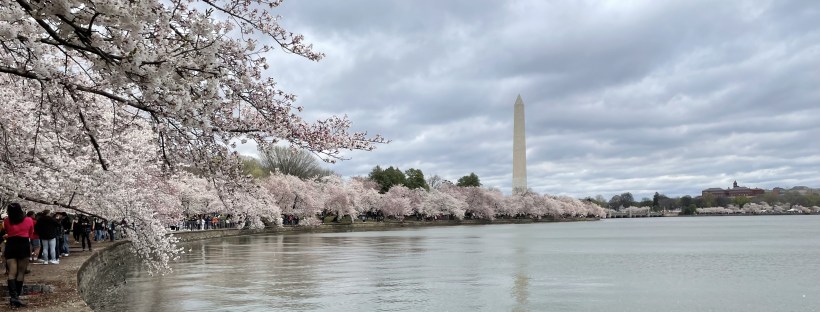
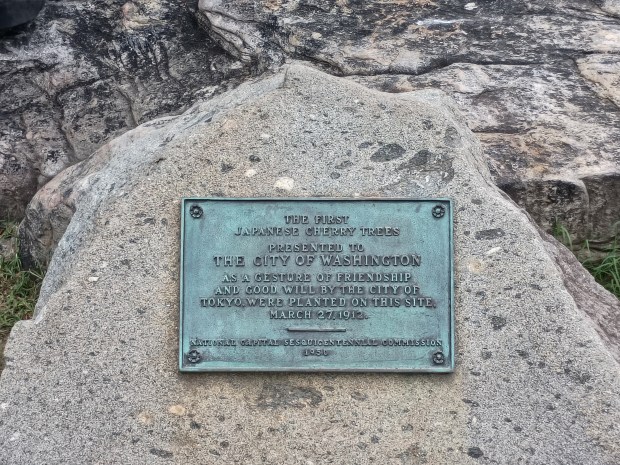
After that, the trees were then planted around the Tidal Basin with the remaining going to East Potomac Park. The first few trees were planted with a ceremony with Mrs. Taft and Viscountess Chinda, wife of the Japanese Ambassador.
Only a while after the trees were mature, many photographers and artists all around were drawn to the trees. Quickly, after the news of the trees spread, it became a very popular place for people all across America to come witness the gorgeous pink hues across the trees with people of all cultures and backgrounds coming to celebrate the blossoms. In 1915, President William Howard Taft (Helen Taft’s husband) sent a gift of dogwood trees to Japan in appreciation of the generous gift of cherry blossoms to D.C..From the impact of the trees, I feel that this shows the way that the friendship of the U.S. and Japan grew bigger and improved from gift giving between them.
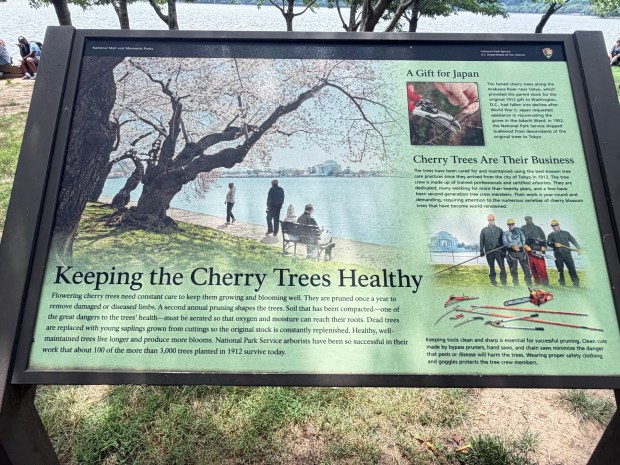
Cherry blossoms even had so much of an impact on the people around that even the attempt to remove some had people in protest. In 1938, with President Franklin D. Roosevelt approved to clear the grounds near the Tidal Basin to construct the Jefferson Memorial, people were outraged at the thought of their precious trees being removed causing people to go as far as to tie themselves to the trees to stop the removal. Ultimately, the construction crew had to resort to removing them during the dead of night as the only way to go around this roadblock. Even after the impact of World War II and the high tensions, they still continued maintenance and improving the cherry blossoms and the US’s and Japan’s unity. This had shocked me seeing how quickly friendly relationships between the U.S. and other countries can change, but I feel it just shows how much of an impact gift can make and how special the trees had become.
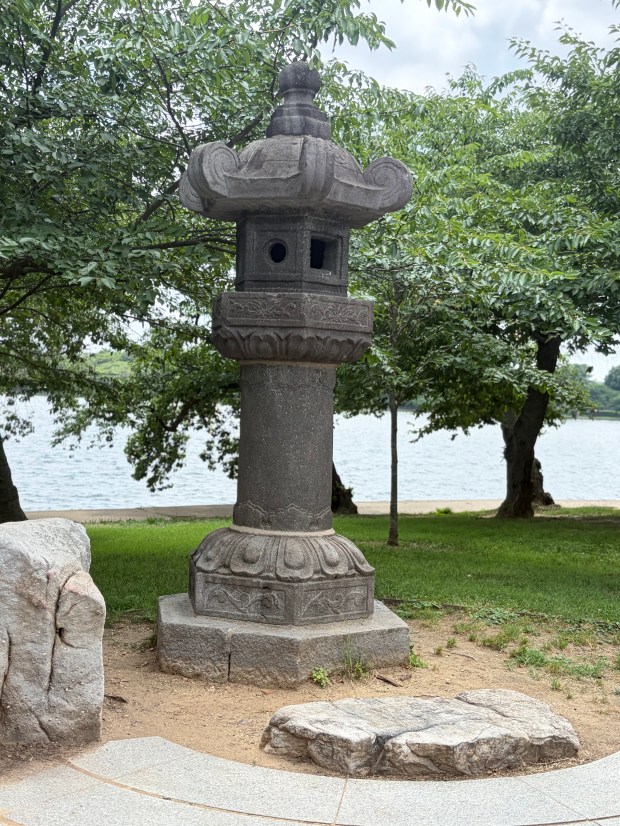
Not long after, in 1954, Japanese Ambassador, Sadao Iguchi, presented a 300 year old Japanese stone lantern to continue the celebration of the 100th year anniversary of the first treaty of peace between the United States and Japan. Pushing along the tight friendship between the United States and Japan with the love and appreciation of Japanese culture in the States.
Clearly as seen, cherry blossoms were a highly loved and celebrated thing in the US as well as Japan with their many Hanami festivals consisting of music, cultural performance, traditional food, artwork, etc. And just like them, we too celebrate cherry blossoms with similar tastes. One popular event is the Bloomaroo, hosted at the Wharf with many places to watch and listen to many talented artists, to enjoy painting on canvas or on faces, and of course to explore many places to catch a break to eat the wonderful food around. I myself have gone with some family of mine and have loved the fun and lively experience from going, I enjoyed getting to see how decorated everything was from buildings to street stands as well as people. I overall enjoyed how people dressed for the occasion and the welcoming atmosphere of everything.
To this day, cherry blossoms are still a highly celebrated symbol of unity between Japan and DC. Both places share the joy of celebration with this shared tree. A beautiful display of a culture exchange that can come out of friendship.
If you’d like to learn more about the history of the cherry blossom trees in DC, check out these two links:
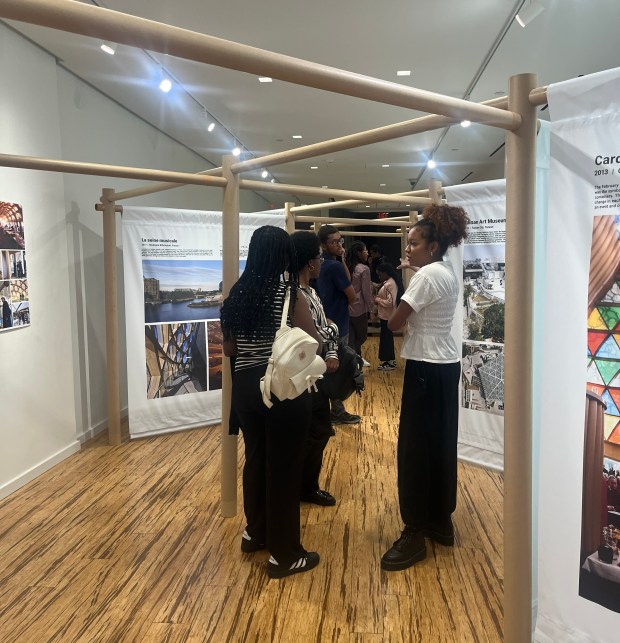
When you’re in a conversation about architecture, your brain immediately goes to metals, stones, or other generic foundation materials. Nobody expects to hear that someone is using paper tubes and cardboard to create living spaces. Going to the Japan Information and Culture Center (JICC) on July 10 was very eye opening. The speaker during the first part of our program was Gabrielle Headly, who we had met earlier in the program, and who now guided us through the exhibit and shared the history behind Shigeru Ban and his peculiar building ideas.
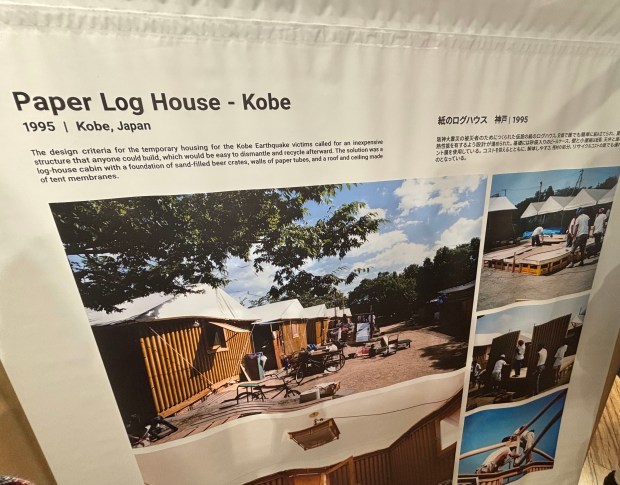
Ban’s style of architecture was an interesting one, beginning back in 1986 with experimentation, and humanitarian aid beginning in 1995. During that time, he worked on his first major project: designing low cost, easy to build houses out of paper tubes for Japanese disaster victims following the Kobe, Japan earthquake. These homes, despite being built of a widely known fragile material, were very sturdy, and allowed for sustainable living.
Ban’s style is a very intriguing one to me, because who thought one man could put together a whole organization solely for disaster aid, let alone with paper and cardboard?? Shigeru Ban is a huge inspiration for me to innovate and be more creative with my works, and I’d love to research more about him.
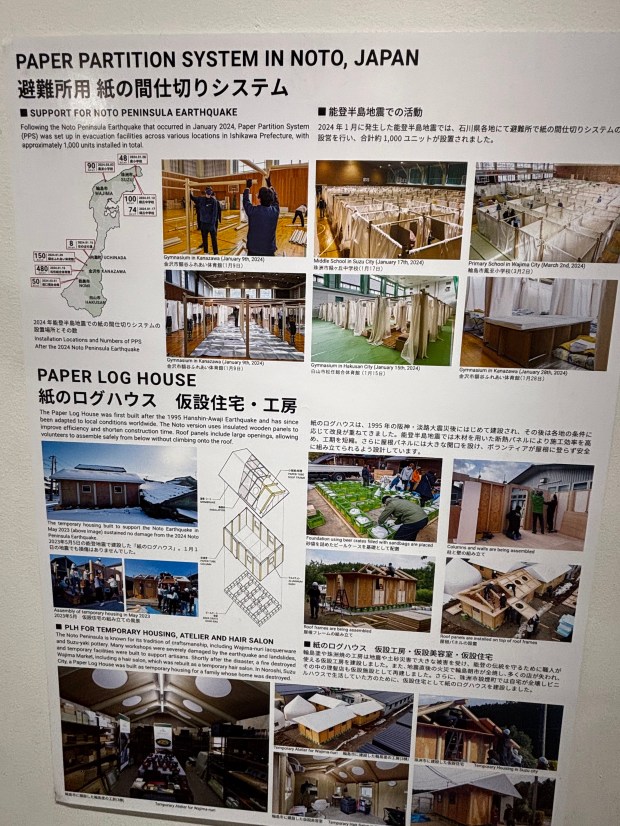
Something I’d like to briefly talk about is his Paper Partition System, used in Noto, Japan following their earthquake in 2024. The Paper Partition System provided privacy and homes for families who were victims of the earthquake. These systems were deployed all over workplaces, gyms, and community centers, allowing many people to be guaranteed to have a safe place to live while dealing with their circumstances.
Being an extension of Ban’s already innovative paper log houses, the PPS was already majorly impressive, garnering respect from not only the citizens of Japan, but many humanitarian aid organizations as well. Shigeru Ban was and still is an impressive architect, and his influence is still around today, you just have to look for it.
On Thursday evening, July 9th, we went to a Tanabata Festival, also called the Star Festival, as part of an extended workday. The Tanabata Festival actually originates from the Chinese Qixi Festival. Tanabata means “evening of the seventh,” and celebrates the meeting of the deities Orihime and Hikoboshi. Tanabata is celebrated by writing a wish on a piece of paper called tanzuku and hanging it on bamboo.
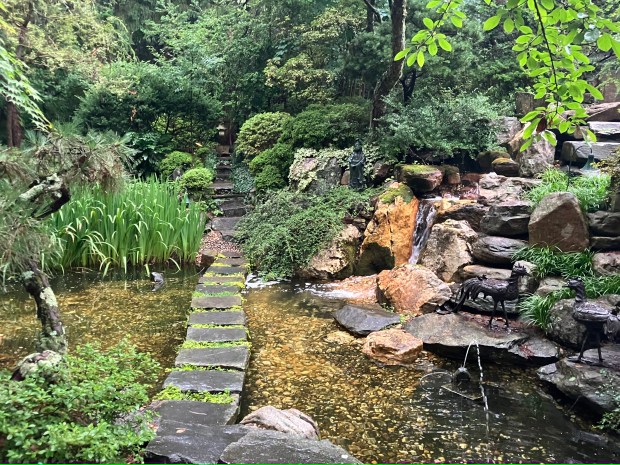
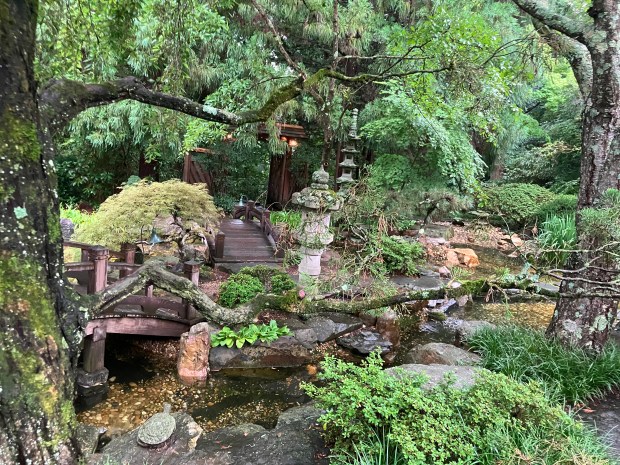
In DC, the Tanabata Festival, sponsored by the Japan America Society of Washington DC, was held at the Hillwood Estate near Rock Creek Park. There were a few activities like writing wishes and making lanterns. However, the part I enjoyed the most were the gardens, which were just a part of the estate. The nicest part was the section inspired by Japanese gardens. It was fairly small, but very beautiful. My favorite part were the paths that went through the water.
In Japanese culture, these bridges have a deeper meaning, they represent a transformation. In Shinto mythology, bridges connect our world to the gods and spirits. The reason why they’re so arched is so evil spirits cannot cross over them, because evil spirits are believed to travel in straight lines only.
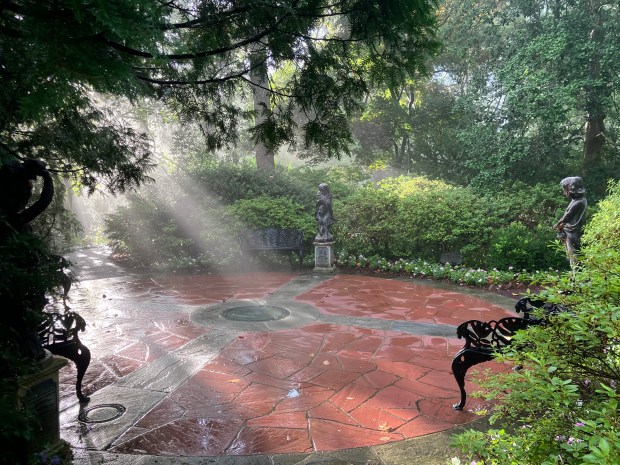
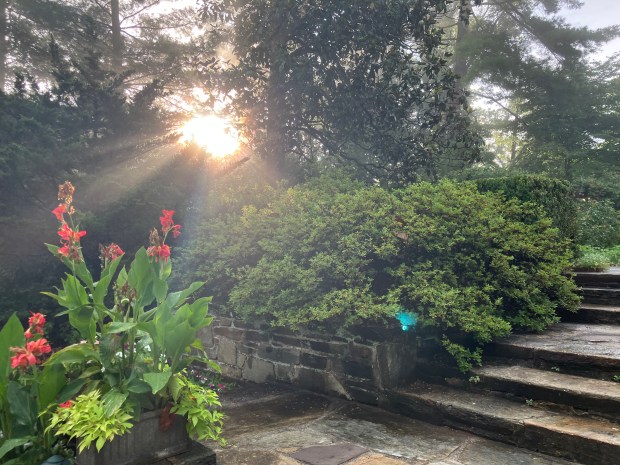
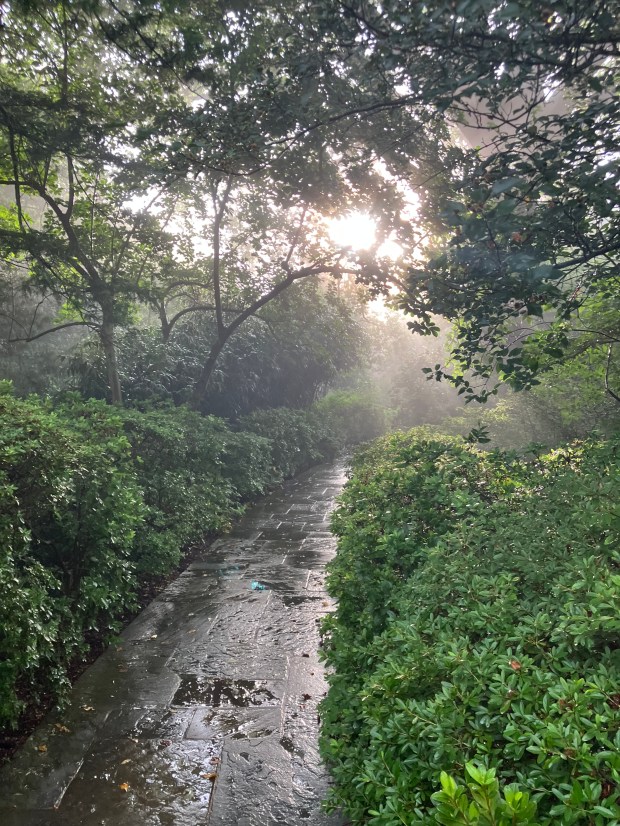
It felt amazing going through the gardens after walking around by the monuments all day, cleansing even. I had a headache when we arrived at the Tanabata Festival; after I went through the gardens it was completely gone. It had just stopped raining when we got there, so it started to get foggy. The second time I went through the gardens, the fog was at its thickest, and the clouds had parted just enough for the sun to shine through. We could see the rays of light shining through the trees, the only word I could use to describe it was mystical.
Today, July 7th, former Japanese American Veterans Association (JAVA) President Gerald Yamada shared his story on Japanese American exclusion. Many believe that the discrimination against Japanese and Japanese American individuals began with the bombing of Pearl Harbor, but this just isn’t the case. In fact, the discrimination dates all the way back to the early 1800s, when Japanese immigration began. The year 1942, after Pearl Harbor, was when it got bad. During this time, incarceration camps were established. At the same time, interestingly, a military unit for Japanese Americans, the 442nd, was formed. This regiment is famously the most decorated unit for its size and length of service in the history of the US military. After the end of World War II, and the 442nd’s service, incarceration camps were closed down and the Japanese were allowed to go home, but weren’t fully integrated.
Mr. Yamada’s presentation was very insightful. I learned many things I previously hadn’t known. One thing I hadn’t known was how far back Japanese American discrimination had dated, which both intrigued and frightened me. I encourage everyone to research about the War Relocation Authority (WRA) camps and the history behind the discrimination of Japanese Americans. Additionally, I was surprised by the amount of awards the previously mentioned battalion, the 442nd, was given. Their awards consist of 4,000 Purple Hearts, the Congressional Gold Medal, 21 Medals of Honor, and many more.
On Day 6, we were given a presentation by Mr. Gerald Yamada, the former President of the Japanese American Veterans Association (JAVA). Gerald Yamada helped to create the annual celebration of the Day of Affirmation, which this year will be celebrated on July 18th. The Day of Affirmation’s origins go back to 1946, when President Harry S. Truman acknowledged the patriotism of the Japanese Americans who served in World War II, even after their incarceration. “You fought not only the enemy, but you have fought prejudice – and you have won.”
Mr. Yamada talked about events that transpired and groups that existed during World War II, which includes the 442nd Regimental Combat Team (also known as the Purple Heart Battalion), and the 1399th Engineer Construction Battalion. Both groups were solely comprised of Japanese Americans.
The 442nd was comprised of 4000 initial Japanese American volunteers from Hawaii and the contiguous US, which grew to 14,000 to 18,000 members by the time the war ended. They had fought in five major battles. The 442nd was sent on a rescue mission to rescue Texas’s Lost Battalion from imprisonment by German forces. Saving the 211 surviving members of the Lost Battalion cost the 442nd over 800 casualties of both killed and wounded men. The 442nd also pierced the Gothic Defense Line in only 34 minutes, which is regarded as a key factor to ending the war. In total they have been awarded 7 Presidential Unit Citations, 21 Medals of Honor, 29 Distinguished Service Crosses, and over 4,000 Purple Hearts, all in 30 months. The 1399th was a team stationed in Hawaii that consisted of almost 1,000 men. They were responsible for 54 construction projects that contributed to the defense of Hawaii after the attack on Pearl Harbor.
Personally, I find it inspiring that people can find the will to fight for a country that has unfairly stripped away their rights and freedoms purely because of their ethnicity, and the faith that the country that had betrayed them can turn it around for the better. Especially since the Japanese Americans didn’t know what was going to happen to them during the war, so volunteering was essentially a leap of faith. I don’t think I could gain the courage to take a risk as big as that. Choosing to take the risk was really commendable!
One day, one attack Changed the lives of many people. Many stories began, and many dreams came to an end. Many lives were lost. Many did not know why. Many died. Many fought for what was right. Many could not fight.
I would send you many paintings, The day you would no longer see me as an enemy. I would place flowers at your door, The day you would no longer see me as an enemy.
The children did not know they were trapped, Living inside invisible prisons. Born here, yet treated as strangers in their own land. Japanese by heritage, American by birth, Misunderstood, yet they stood strong.
Don’t hurt your own family Just because their roots come from another tree. Their roots are here too, Just like yours and mine.
From the ashes of war, a new dawn rises. Two nations, once divided, grow closer. Cherry blossoms bloom beside the Tidal Basin, As symbols of peace, friendship, and hope.
Together we stand across the ocean wide, In friendship and hope, side by side.

 GLOBALIZE DC: JAPAN